

How Dash Pots Work
Turbulence Hits the Paddle
Cavitation, violent turbulence, or rapid flow fluctuations cause the paddle to oscillate back and forth — conditions that would produce nuisance trips on a standard switch.
Dash Pot Resists Stem Motion
The pneumatic dash pot assembly — using a precision glass cylinder and graphite piston — resists rapid stem movement via viscous friction. Short-duration oscillations are absorbed before the stem can reach the set point.
Up to 30-Second Delay Before Trip
Only a sustained, genuine change in flow — held long enough to overcome the dash pot resistance — deflects the stem past the set point and actuates the switch. The delay period is adjustable up to 30 seconds.

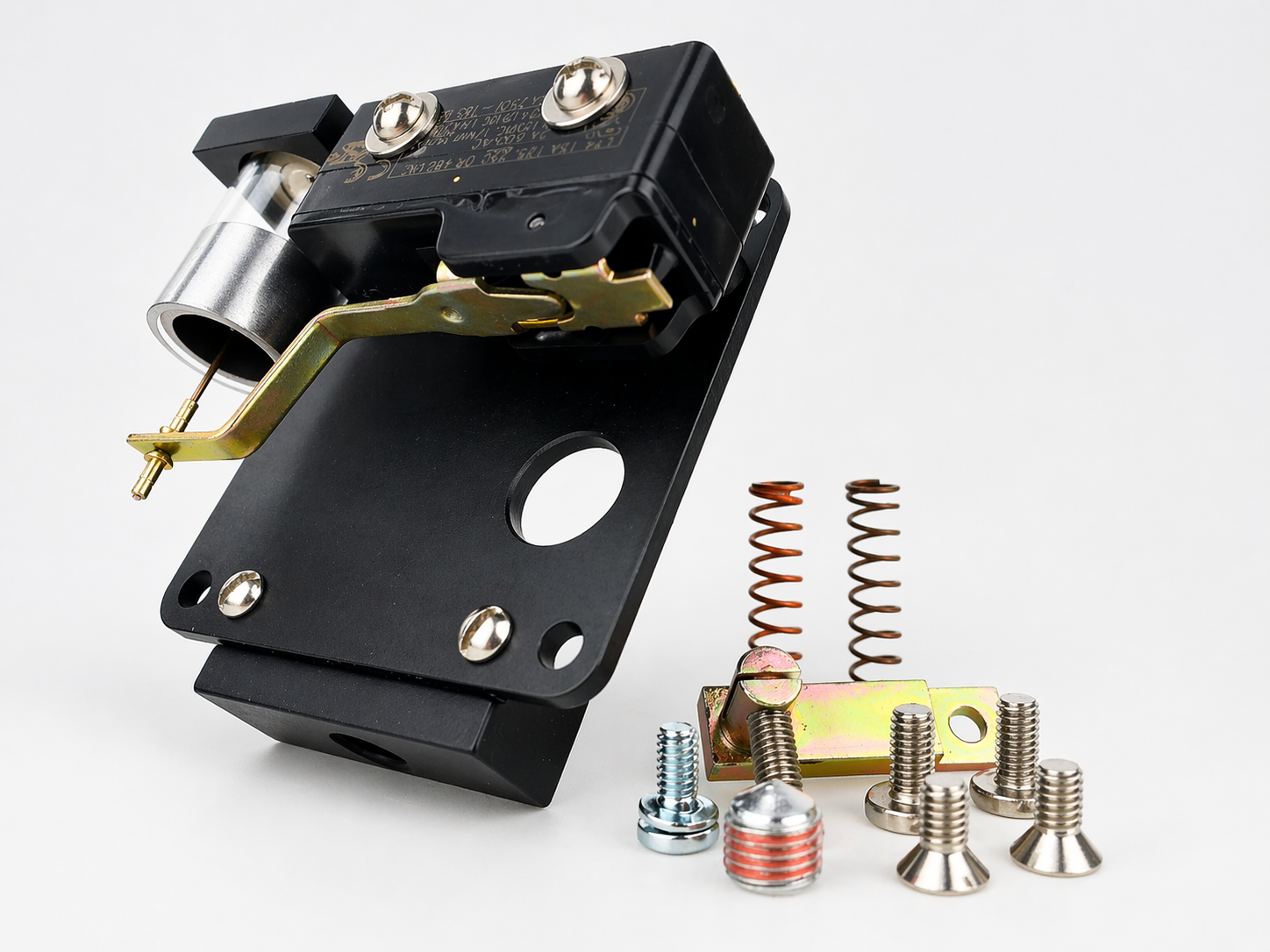
Precision Pneumatic Design
A dashpot is a mechanical damper that resists motion via viscous friction. The resulting force is proportional to velocity but acts in the opposite direction — slowing stem movement and absorbing energy from turbulent flow events.
PEECO Dash Pots use instrument-quality pneumatics with a low-expansion precision glass cylinder and graphite piston — delivering consistent, repeatable damping performance across a wide range of flow conditions.
Key Features
Up to 30-Second Adjustable Delay
The delay period before breaking contact and closing circuitry is fully adjustable up to 30 seconds — giving you precise control over how long a flow change must persist before the switch trips.
Precision Pneumatic Technology
Instrument-quality pneumatic devices built with a low-expansion precision glass cylinder and graphite piston. The result is consistent, repeatable damping performance across a wide range of flow conditions.
Eliminates Cavitation Chatter
Cavitation and extremely high or low gaseous flow create rapid switch chatter that damages contacts and generates false alarms. The dash pot absorbs these short-duration disturbances before they reach the switch mechanism.
Available on All Series & Styles
Compatible with N Series, E Series, and H Series flow switches across all mounting styles — tee, inline, wafer, and saddle. Specify the -DP suffix when ordering.
Typical Applications
Pump discharge lines with cavitation risk
Cooling water circuits with flow fluctuations
High-velocity gas flow monitoring
Low-velocity gas flow detection
Turbulent liquid lines near elbows or valves
Hydraulic systems with pressure spikes
Process lines with intermittent surging
Any application requiring time-delayed switch action
Dash Pot vs. Stem Dampener
Both options prevent false actuation from turbulent or pulsating flow. Use this table to choose the right damping method for your application.
| Dash Pot (-DP) | Stem Dampener (-SD) | |
|---|---|---|
| Damping location | External pneumatic assembly | On the stem (internal) |
| Delay range | Up to 30 seconds, adjustable | Adjustable, shorter range |
| Best for | Cavitation, turbulence, gas flow chatter | Pulsating pumps, compact installs |
| External components | Separate dash pot assembly | None |
| Ordering suffix | -DP | -SD |
Specifications
| Delay Range | Up to 30 seconds (adjustable) |
| Damping Technology | Precision glass cylinder + graphite piston |
| Ordering Suffix | -DP |
| Compatible Series | N Series, E Series, H Series |
| Mounting Styles | All — tee, inline, wafer, saddle |
| Typical Use Case | Cavitation, turbulence, gas flow fluctuations |